
Does everyone secretly like sweet wine? Here is what you need to know NOW!
Some people get so touchy with dry versus sweet.
You could be saying, “I only like dry wine!!”

Dry is not as self evident as one may think! See below.
You could be saying, “I really like only sweet wine.”
Not much of a secret.
Here’s a shocker for most people:
Most wines are dry, and all wines that taste sweet are not the same! At all!
Let’s start with the idea that just using the terms DRY and SWEET are way too limiting.
Do not limit your choices by drawing an arbitrary line in the sand! Learn stuff!
Sweetness exists on a spectrum. Fruit forward and sweet are NOT the same thing. Sweet isn’t a flavor.
Dry wine does not just mean “not sweet! To many people it means tannic. (When I said see below, this is the “below.)
So many people once had a wine they couldn’t stand years ago, and have been avoiding whatever they think is similar.
Remember that while preference is personal, your tastes can change.
THE BASICS:
The simplest definition of sweet wine is that it generally comes from residual sugar.
RS, as it is abbreviated, is the amount of sugar remaining after fermentation.
Even wine considered “dry” will have up to 10g.
Wine is not Sugar Free. Grapes themselves have natural sugar.
Now that we have gotten that out of the way, let’s discuss:
Wines that Taste Sweet but are actually Dry:
There are wines that smell sweet because of the grape and where it is made. It is not a sweet wine, but people think it is because it smells like peaches or apricots if a white wine. Some grapes are just more aromatic. Examples of these are:
White Wines:
Gewürztraminer
Viognier
Chardonnay
Riesling
Torrontés
I could go on and on.
Then there are those that smell like jam, baking spices or chocolate. Examples of these are:
Red Wines:
Zinfandel
Grenache
Shiraz/Syrah
If any of these wines are made in a warm climate, this will be even more pronounced.
HINT:
If this kind of sweetness is not to your taste, think about saying you prefer “savory” wines rather than dry.
Now let’s get to the wines that are made to actually be sweet.
How do they do that, you may ask.
There are a lot of ways:
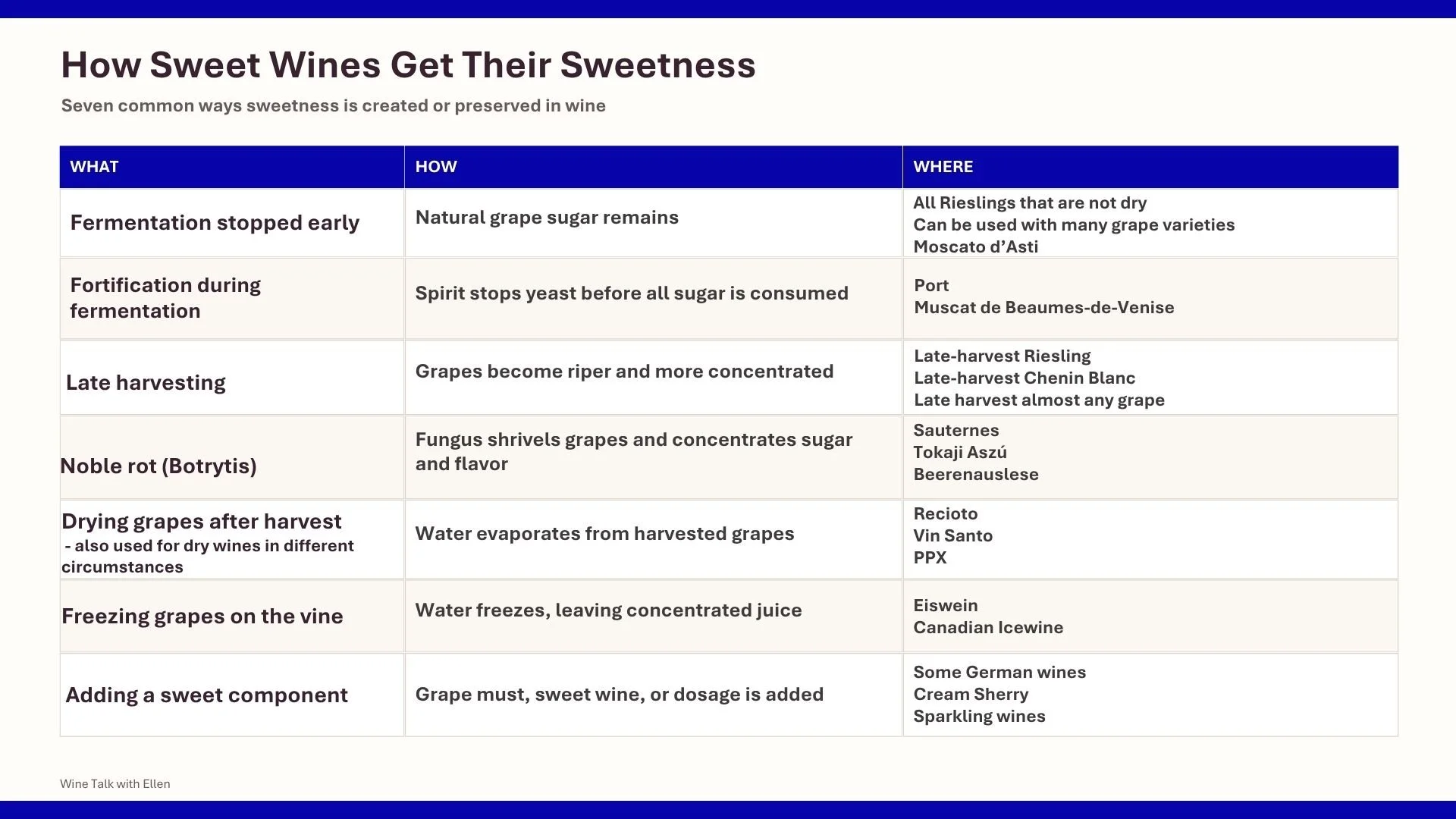
That is definitely a lot of ways.
Let’s clear some things up. All of these wines have varying levels of sweetness and price points.
Let’s talk about that.
All of these sweet wines cannot necessarily be considered a dessert wine. Just stopping fermentation and leaving residual sugar doesn’t give you that intense balanced sweetness that screams dessert wine to me.
This is my opinion. I even tested it. I tasted (with my video editor) wines with residual sugar against a late harvest wine. We even tasted different foods with it!
I even made a YouTube video about this. Here you go:
Watch it now or watch it later. Subscribe. We did not agree on our likes and dislikes, by the way. Find out the result.
Want a button to just click?
Want to try a taste test like this yourself?
There is a new tasting mat in the store that you can use.
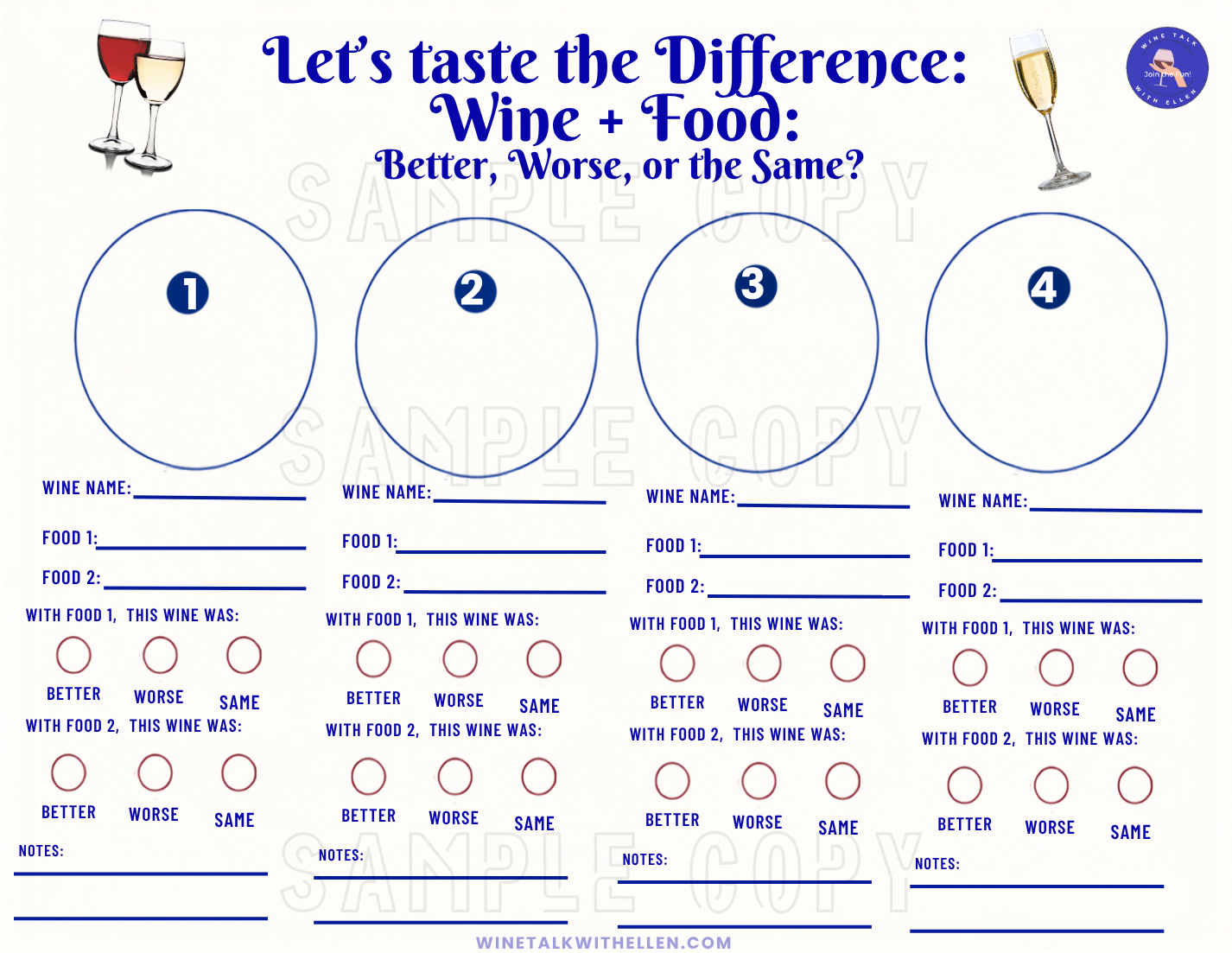
The picture is clickable. Just saying.
Dessert wines are made by using methods that really concentrate sugar and flavor.
And they are generally more expensive. Anything that requires more labor or time is going to cost more.
Now that you see the types of wines in the chart, you will understand why a Sauternes will be costly. Waiting around and handpicking grapes with Botrytis is time and labor intensive.
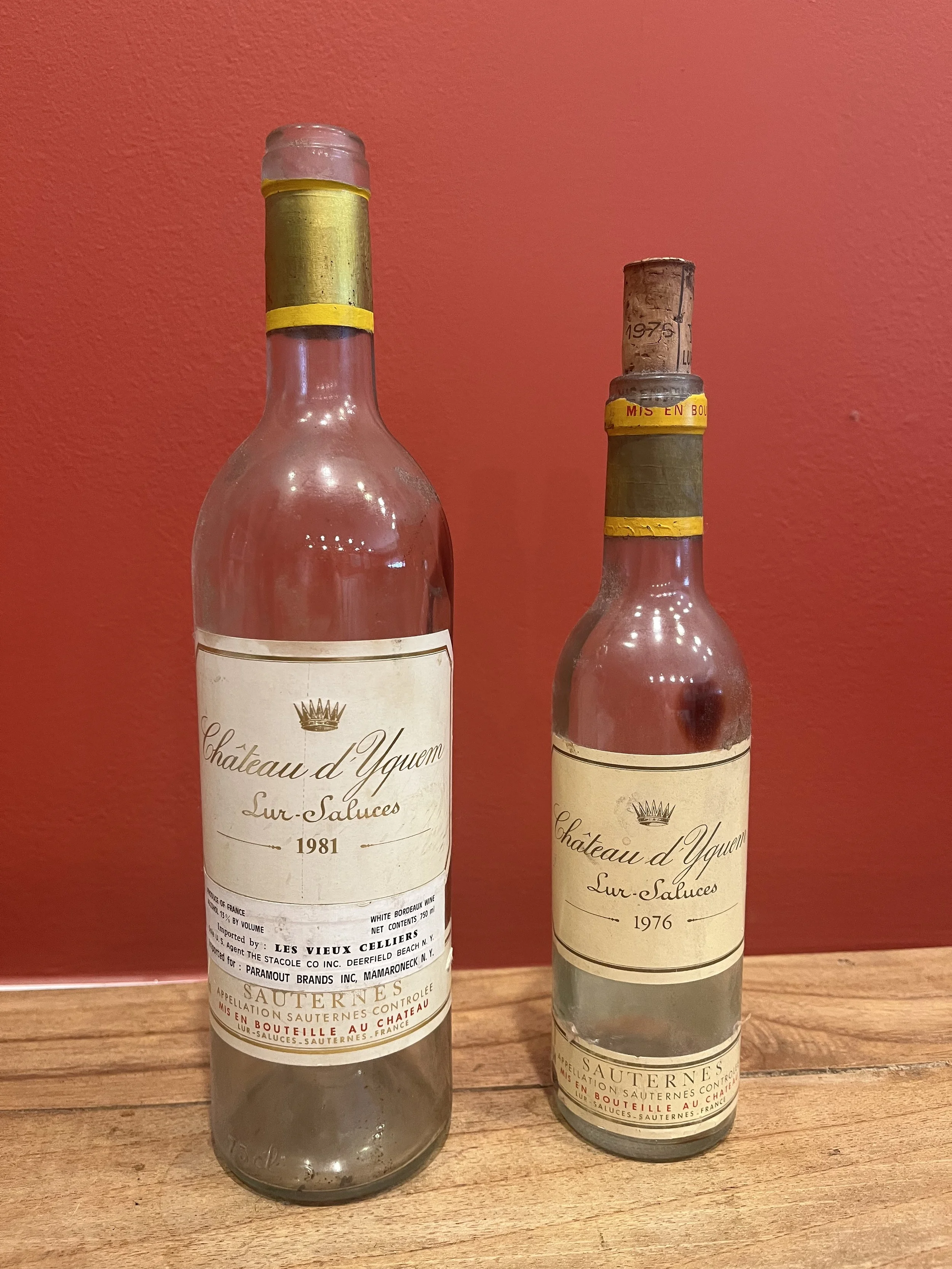
Château d’Yquem is one of the most famous Sauternes dessert wines. Not all Sauternes are this expensive, but it is not a bargain wine at all.
Dessert wines of all kinds are usually sold in smaller bottles. Given the concentration of flavor, it is usually a smaller pour as well.
Same goes for Ice wine and Late harvest wines. The amount of sugar in the grapes must be monitored carefully.
Careful balancing of acidity and alcohol and sugar are essential for a delicious wine.
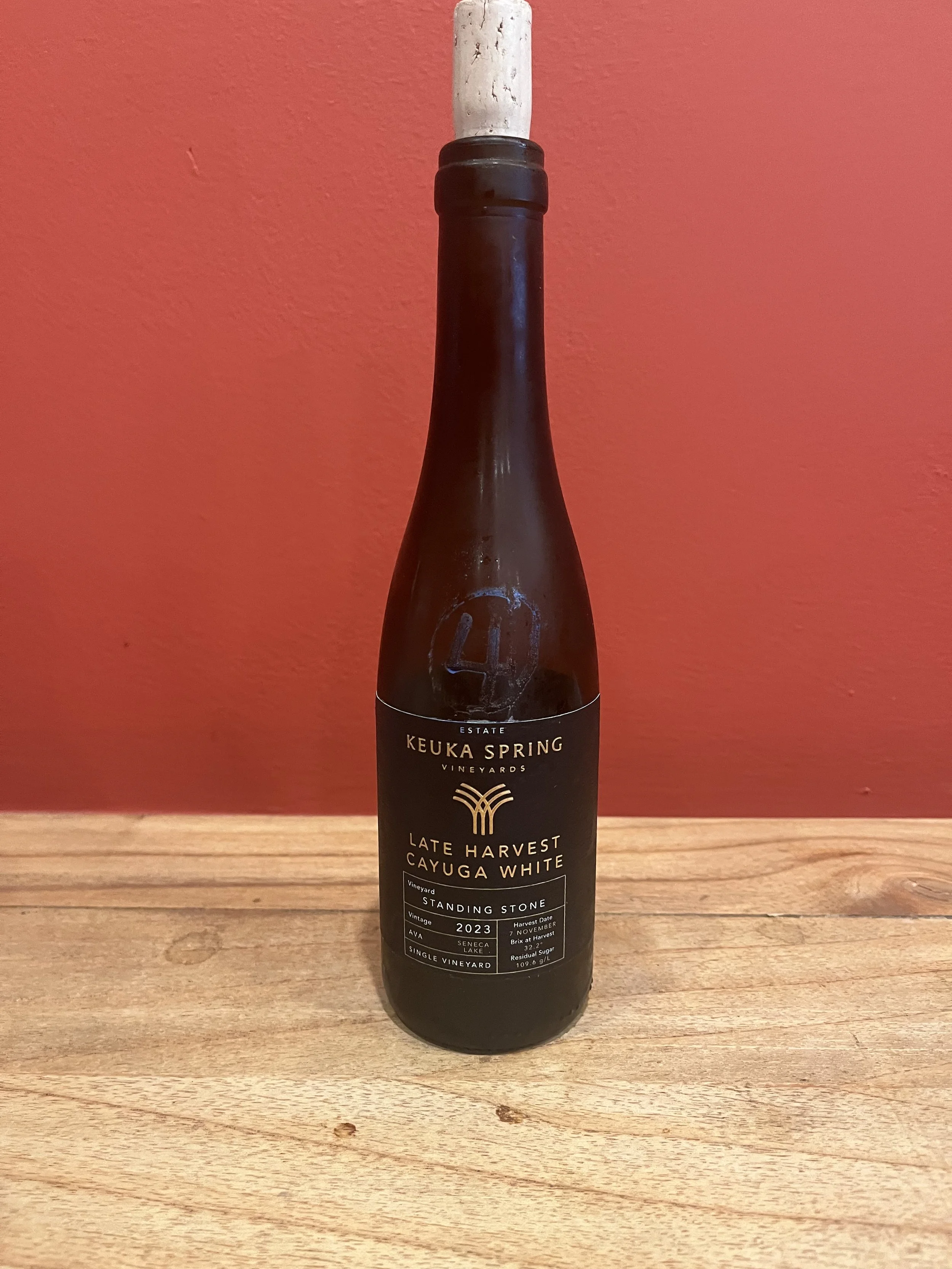
This is the late harvest wine from Keuka Spring Vineyards that we tasted in the YouTube video. The grape is Cayuga.
The front label shows how sweet the grapes were when picked (Brix) as well as the RS. Incredibly helpful. Not all labels will do that!
How can you figure out whether a wine is sweet or not by looking at a wine label?
Well….
sometimes the label gives you a clear answer as with the Keuka Springs label above. Sometimes it gives you clues. And sometimes it seems determined to make you do research before opening a bottle.
Here are some clues:
Look for an explicit word such as Dry, Off-Dry, Semi-Sweet or Sweet. In the Finger Lakes, there is often a sweetness scale on the back label. If there is a specific RS, that’s even more helpful.
Champagne (yep, they can be sweet too) and other sparkling wines have official categories: Look for Brut or Extra Brut if you don’t want sweet.
Just to mess with you, Extra Dry can be sweet!! Check related posts below for more Sparkling wine info.
Check the alcohol level, particularly with Riesling. Lower alcohol can indicate sweetness. For more Riesling info check related posts below, too.
BEST ADVICE:
Experiment!
I always recommend not spending more than you have to.
See what wines work for you and at what price point. If you aren’t spending a ton of money, you can play around and find delicious wines whether they are sweet or not.

Have wine add to your life! Have fun!
Related Posts:
For info on sparkling wine sweetness levels, and a lot more:
Updated all you need to know to Break out the Bubbly! Right now!
For info on all things Riesling ( This was part of my since retired monthly fun wine resolution series) :
April New Year’s Resolution is all about fun with Riesling Wine